ood 🟢 Stable
Subjects |
4 — |
Maturity |
🟢 Stable — Formal validation paper or substantial reuse. Reused in 8 papers. Held-out test set of the Algonauts 2025 challenge (out-of-distribution phase), still the active test set of the benchmark on Codabench; validated by the common QC metrics only. |
Tasks |
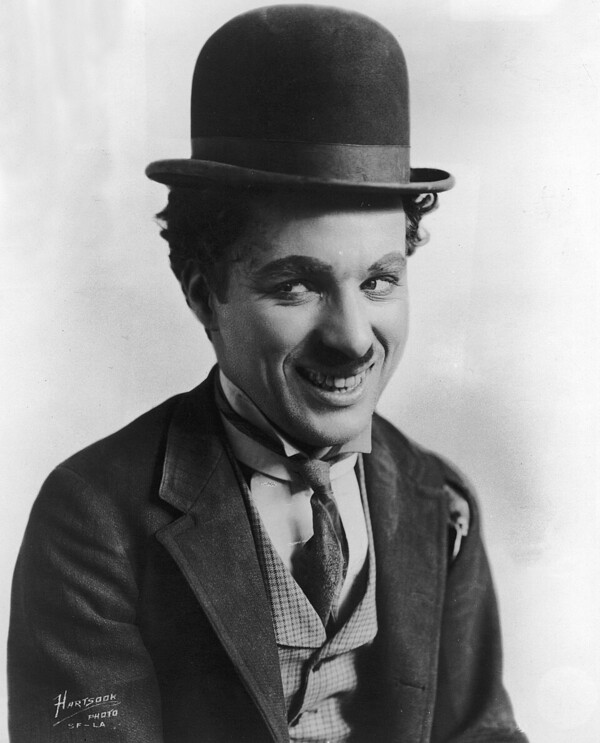
🎬 6 out-of-distribution films and TV programmes (~2 h unique content) — Two ~8-12 min segments each from a Charlie Chaplin film, Princess Mononoke, Passe-Partout, Planet Earth, Pulp Fiction and World of Tomorrow; each segment shown once per subject. |
Data |
🧠 fMRI — 2.0 h/subject |
🎬 Naturalistic video — 2.0 h/subject |
|
🔊 Audio — 2.0 h/subject |
|
🗣️ Speech listening — 2.0 h/subject |
|
Assets |
📁 BIDS · 🧠 fMRIPrep · timeseries |
How to cite
Gifford, A., Bersch, D., St-Laurent, M., Pinsard, B., Boyle, J., et al. (2025). The Algonauts Project 2025 Challenge: How the Human Brain Makes Sense of Multimodal Movies.
Contributors
Conceptualization: Marie St-Laurent · Alessandro T. Gifford · Lune Bellec
Data curation: Marie St-Laurent · Basile Pinsard · Julie A. Boyle · Alessandro T. Gifford
Funding acquisition: Lune Bellec
Investigation: Basile Pinsard · Julie A. Boyle
Methodology: Marie St-Laurent · Basile Pinsard · Alessandro T. Gifford
Project administration: Marie St-Laurent · Julie A. Boyle
Software: Basile Pinsard
Supervision: Lune Bellec
Validation: Alessandro T. Gifford
Writing – review & editing: Lune Bellec
Funding: Courtois Foundation
Overview
The ood (“out-of-distribution”) dataset was collected to test how well brain encoding models trained on CNeuroMod movie data (friends and movie10) generalize to movie content that differs from their training distribution in different ways. Participants watched excerpts from six films and TV programs chosen to span a range of genres, visual styles, tones and languages: a silent black-and-white comedy, hand-drawn and digital animation, a vintage children’s show in Canadian French, a nature documentary, and a neo-noir crime feature film.
The dataset served as the held-out test set for the second, out-of-distribution phase of the Algonauts 2025 challenge, in which models trained on Friends and movie10 were evaluated on their ability to predict brain responses to these new stimuli. Results from the challenge winners show that prediction accuracy drops substantially relative to in-distribution data (Friends season 7), and that the drop is largest for the most atypical stimuli, such as silent film, abstract animation, and nature documentaries (d’Ascoli et al., 2026).
Stimuli
Each source was edited into two segments of roughly ten minutes (8–12 min), each presented in a separate run, for about two hours of unique content per participant. Every participant saw every segment once (no repetitions).
|
Source |
Segment durations |
Notes |
|---|---|---|---|
|
“The Pawn Shop” (Chaplin, 1916), a Charlie Chaplin film |
10.7, 10.1 min |
Music, black-and-white; no speech |
|
Princess Mononoke (Miyazaki, 1997) |
10.5, 10.6 min |
Hand-drawn animation |
|
Passe-Partout (Lachance, 1979), episode 94 “Bon Coup, Mauvais Coup” and episode 95 “Cause et Effet” |
10.5, 10.8 min |
French-language children’s show from Québec (Canada) featuring puppets and live-action |
|
Planet Earth (BBC, 2006), episode 2 “Mountains” |
10.8, 10.4 min |
Originally a wildlife documentary with narration; scenes featuring wildlife were edited out to show only landscapes |
|
Pulp Fiction (Tarantino, 1994) |
11.6, 9.4 min |
Neo-noir crime comedy |
|
World of Tomorrow (Hertzfeldt, 2015) |
8.8, 8.0 min |
Abstract, minimalist animated short |
Segments were cut from the source videos with MLT melt, with every step recorded as a datalad run command in the stimuli dataset. Some segments are a single continuous excerpt (chaplin, mononoke, pulpfiction, wot), while others join two non-contiguous excerpts (passepartout, planetearth). Each segment starts with a fade-in from black and ends with a fade-out to black, and a black gap separates spliced excerpts. Audio was normalized with a dynamic range compressor and equalizer so that loudness stays comparable across sources. The edited segments are in ood/bids/stimuli/<source>/task-<source><seg>_video.mkv, next to the uncut source videos.
Sessions and runs
Data were collected in two sessions per participant:
ses-001:chaplin,mononoke,passepartoutses-002:planetearth,pulpfiction,wot
For sub-05, the passepartout runs were acquired in ses-002 instead of ses-001. Functional runs are named sub-<participant>_ses-<sess>_task-<source><seg>_bold.nii.gz, with a companion _events.tsv file. Presentation used the same software as the other CNeuroMod video tasks (src/tasks/video.py in the task_stimuli repository).
Important
The ood segments were the hidden test set of the Algonauts 2025 challenge. Teams never had access to the brain data during the challenge. If you compare your results to the challenge leaderboard, keep in mind that the official scores were computed on parcel-wise timeseries (Schaefer 1000 parcels, MNI152NLin2009cAsym, z-scored per run) produced with the challenge’s preprocessing.